
CISAC Year in Review 2013-2014
CISAC Year in Review 2013-2014
The Center for International Security and Cooperation had an exciting and highly productive 2013-2014 academic year. CISAC held 81 events, ranging from our weekly science and social science seminars to special programs that included a conference on critical infrastructure protection with Sandia National Laboratories, a workshop examining the public health and governance challenges in fighting infectious diseases, and events with the Commander of U.S. Strategic Command C. Robert Kehler and the former FBI Director Robert Mueller. Our pre-and postdoctoral fellowship programs received a record number of applicants. Our signature honors undergraduate program was renewed by the university with rave reviews. CISAC’s emerging research and policy initiatives in biosecurity and cybersecurity grew substantially while we continued to deepen our engagement in nuclear security and risk reduction. We also expanded our online presence with a new website and the creation of our first online Massive Open Online Courses (MOOCs) by William Perry, Martha Crenshaw, and Amy Zegart. And we recruited three new eminent faculty members and scholars to join our community.
Leadership
The center started the academic year with a change in leadership. In July 2013, CISAC Co-Director and Law Professor Mariano-Florentino Cuéllar became the director of the center’s parent organization, the Freeman Spogli Institute for International Studies. Hoover Institution Senior Fellow and intelligence expert Amy Zegart succeeded Cuéllar and joined Co-Director David Relman, Professor of Medicine, and Microbiology and Immunology at the Medical School. The three have worked closely to spearhead new partnerships and initiatives within CISAC, across FSI, and among other departments, schools and institutes at Stanford. Cuellar’s ties to the law school, Relman’s work at the medical school and Zegart’s affiliation at Hoover have provided continuity while building on the center’s areas of research. Its unique model of naming science and social science co-directors since its founding in 1983 has allowed the center to bridge the fields that address pressing issues of international security and cooperation.
Seminars, Events and The Drell Lecture
CISAC hosted 81 science and social science seminars, workshops and events, with speakers coming from the public sector, the military, private agencies and academia, including those from Harvard, Cornell, Columbia, Princeton, Oxford and other international universities. They included DARPA Director Arati Prabhakar, who spoke about the next breakthrough technologies for national security, and Sir Lawrence Freedman, professor of war studies at King’s College London and a foreign policy advisor to former British Prime Minister Tony Blair, who discussed the history of strategic power.
The International History Seminar series was added to CISAC’s already robust lineup. The series included talks about the collapse of the Russian economy during the Cold War and rethinking the First World War from the perspective of international law. Our fellows created two new reading groups examining risk and cybersecurity.
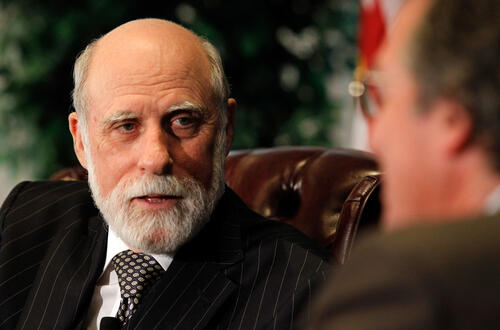
Vinton Cerf, one of the “fathers of the Internet” and vice president and “Chief Internet Evangelist” at Google, gave CISAC’s annual Drell Lecture. The Silicon Valley icon spoke about safety and security in a transnational online environment and more than 6,000 visitors joined the live stream of the talk.
Fellowships
CISAC continued our rich tradition of training some of the best emerging talent in international security by recruiting a new group of highly talented pre- and post-doctoral fellows. We admitted 20 fellows who are investigating a broad array of international security challenges, from cyber, biological and nuclear security, to conflict resolution and coalition building. True to CISAC’s interdisciplinary approach, many of our fellows advance their research through innovative techniques. For example, Erin Baggott, who is working on her Ph.D. at Harvard’s Department of Government, is one of two scholars carrying the Zukerman Predoctoral Fellow title this year. Erin applies sophisticated computational social science techniques to measure outcomes from conflicts in U.S.-China relations between 1949 and 2012. Justin Mankin, one of CISAC’s predoctoral science fellows, is a Ph.D. candidate in Stanford’s School of Earth Sciences. Justin aims to help inform the adaptation and risk management decisions we undertake in response to the uncertain threats from climate change.
The Stanton and MacArthur Foundations, and the Carnegie Corporation of New York, continued their longstanding support of CISAC, which has enabled our fellowship program to flourish. Last year, the center also received an anonymous gift to extend our cyber fellows program for another three years and the Stanford Law School doubled its funding to create a Law and International Security Fellowship jointly with FSI. Jonathan Mayer – who got his law degree from Stanford while working on his Ph.D. in computer science – worked on the protection of consumer privacy as a CISAC cybersecurity fellow. Cyber fellow Tim Junio researched information technology and national security and Andrew Woods, a Harvard law grad with a Ph.D. in politics from the University of Cambridge, focused on cyber crime and international law. Last year’s inaugural law fellows were Shiri Krebs, a JSD candidate at Stanford Law School specializing in international criminal and humanitarian law, and Moria Paz, who researches minorities, immigrants, international law and human rights.
Undergraduate Honors Program
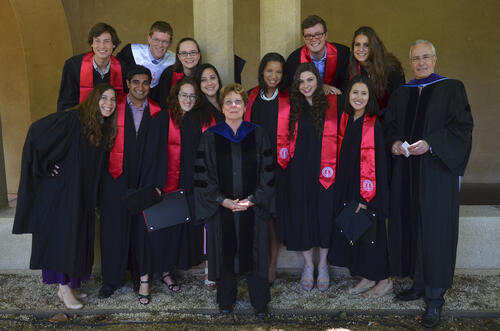
The Stanford Committee on the Review of Undergraduate Majors renewed CISAC’s Interdisciplinary Honors in International Security Studies for another eight years, calling it a “model program” benefitting from the “strong and engaged leadership” of Martha Crenshaw and Coit Blacker. The highly competitive undergraduate program, launched in 2000, works with select Stanford seniors on a capstone thesis project that strengthens their critical thinking, research and writing skills as well as builds their knowledge of international and domestic security policy. The program includes a two-week Honors College trip to Washington, D.C., where students meet with politicians and government officials, congressional staff, journalists and analysts at the CIA, Pentagon and global think tanks.
Last year’s CISAC honors cohort included majors in symbolic systems, political science, biology, computer science, history and international relations. One of last year’s students, Reed Jobs, produced a compelling story about survivors of the Hiroshima and Nagasaki atomic bombs after traveling to Hiroshima with CISAC nuclear scholar Scott Sagan for a peace conference. Mailyn Fidler, a science, technology and society major, was one of only two Stanford students awarded a Marshall Scholarship to continue her studies in international technology policy and investigate “zero-day” software exploits.
Other 2014 Honors graduates went to the Carnegie Foundation in Washington, D.C., the United Nations, Yale Law School and the Silicon Valley data analysis firm, Palantir.
Cyber and Bio Security Initiatives
Zegart and Relman, along with FSI Director Cuéllar, made good on a pledge to put CISAC on the map for cybersecurity. They secured another three years of funding to maintain and expand the fellowship program for doctoral students who are focused on securing the world’s computer networks. They also recruited Herbert Lin, the chief scientist at the Computer Science and Telecommunications Board, National Research Council of the National Academies, as CISAC’s inaugural senior research scholar in cyber policy and research. Lin joined CISAC as a consulting professor in 2013-14 and will begin his tenure as a senior scholar in January 2015 with a joint appointment as a Hoover Research Fellow and instructor in Computer Science.
Jane Holl Lute, deputy secretary at the Department of Homeland Security until last year, became a consulting professor at CISAC and lectured several times about her work as the president and CEO of the Council on CyberSecurity.
[[{"fid":"216507","view_mode":"crop_870xauto","fields":{"format":"crop_870xauto","field_file_image_description[und][0][value]":"","field_file_image_alt_text[und][0][value]":false,"field_file_image_title_text[und][0][value]":false,"field_credit[und][0][value]":"","field_caption[und][0][value]":"","field_related_image_aspect[und][0][value]":"","thumbnails":"crop_870xauto","pp_lightbox":"","pp_description":true},"type":"media","field_deltas":{"4":{"format":"crop_870xauto","field_file_image_description[und][0][value]":"","field_file_image_alt_text[und][0][value]":false,"field_file_image_title_text[und][0][value]":false,"field_credit[und][0][value]":"","field_caption[und][0][value]":"","field_related_image_aspect[und][0][value]":"","thumbnails":"crop_870xauto","pp_lightbox":"","pp_description":true}},"attributes":{"height":"550","width":"870","class":"media-element file-crop-870xauto","data-delta":"4"}}]]
Zegart and Lin worked with the Hoover Institution – where Zegart is also a senior fellow and associate director of academic affairs – to launch a highly successful cybersecurity boot camp in August which brought together 22 senior Congressional staffers from both sides of the aisle with private industry leaders and academic experts for an intensive educational program examining the technical, legal, and political dimensions of cybersecurity. Former Secretary of State Condoleezza Rice and Google Executive Chairman Eric Schmidt joined the three-day workshop for a keynote conversation and Stanford President John Hennessy and Hewlett Foundation President Larry Kramer also spoke to attendees about how foundations are recognizing the critical need for cyber research and development.
Lute addressed the boot camp about the government’s role in protecting the nation’s critical infrastructure from those who mean to do harm; Facebook’s Chief Security Officer Joe Sullivan called on the congressional staffers to work more closely with Silicon Valley in helping to shore up the nation’s public networks while maintaining a level of personal privacy.
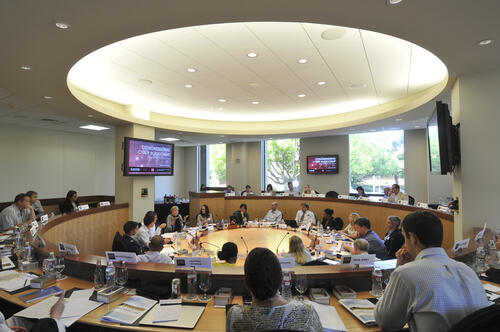
The response among congressional staffers was so enthusiastic that CISAC and Hoover jointly hosted a follow-on cybersecurity seminar on Capitol Hill in October 2014 and are planning additional initiatives with faculty across the university to identify solutions and play a trusted convener role between key stakeholders in government, industry, academia, and the nonprofit sector that will improve cyber policy and security.
Relman facilitated several key seminars at CISAC last year, including the growing crisis of pathogens and poisons in Asian groundwater; microbial diversity, security and public health; public policies surrounding synthetic biology; and how the Nipah virus threatens global security. He worked closely with bioengineer and CISAC fellow Megan Palmer to answer critical questions about the ongoing Ebola crisis as well as asked how scientists can most effectively shape government policy and identify risks during the ongoing life sciences revolution.
CISAC has also expanded its focus on biosecurity. Relman – who advises the U.S. government on pathogen diversity, dual-use technology and biosecurity – was the president of the Infectious Diseases Society of America last year, and continues to serve as chair of the Forum on Microbial Threats at the U.S. Institute of Medicine (National Academies of Science). He was one of a pair of Stanford scientists who received a $6.2 million federal grant to examine the effects of perturbations in humans’ microbial ecosystem.
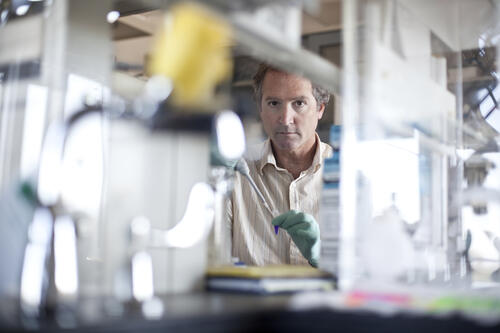
Relman facilitated several key seminars at CISAC last year, including the growing crisis of pathogens and poisons in Asian groundwater; microbial diversity, security and public health; public policies surrounding synthetic biology; and how the Nipah virus threatens global security. He worked closely with bioengineer and CISAC fellow Megan Palmer to answer critical questions about the ongoing Ebola crisis as well as asked how scientists can most effectively shape government policy and identify risks during the ongoing life sciences revolution.
CISAC has also expanded its focus on biosecurity. Relman – who advises the U.S. government on pathogen diversity, dual-use technology and biosecurity – was the president of the Infectious Diseases Society of America last year, and continues to serve as chair of the Forum on Microbial Threats at the U.S. Institute of Medicine (National Academies of Science). He was one of a pair of Stanford scientists who received a $6.2 million federal grant to examine the effects of perturbations in humans’ microbial ecosystem.
Nuclear Security and Counterterrorism
Nuclear security remains at the heart of CISAC’s work to build a safer world. Professor Siegfried Hecker’s Nuclear Risk Reduction program brings together technical and policy experts and promotes collaboration between the United States and Russia, and China and Pakistan. He continued to teach and work on a book about his 25-year collaboration with Russian nuclear scientists and what those personal relationships have meant to détente and nuclear stability.
The New York Times and Washington Post, the Rachel Maddow Show and the Belfer Center at Harvard wrote gripping articles last year about Hecker’s leading role in a 15-year, classified program in which Russian and American scientists collaborated to clean up substantial amounts of plutonium and highly enriched uranium at an abandoned Soviet-era nuclear test site in Kazakhstan.
Hecker was awarded the National Academy of Engineering's prestigious Arthur M. Bueche Award “for contributions to nuclear science and engineering and for service to the nation through nuclear diplomacy.”

Secretary Perry, a CISAC faculty member, continued his Track II diplomacy through his Preventive Defense Project and launched The William J. Perry Project, which works closely with high school and college students to help spread across campuses his message about the dangers of nuclear weapons.
Perry also finished his memoir during this last academic year at CISAC. “My Journey at the Nuclear Brink,” which is due out next year, takes the reader from his days as a young U.S. Army mapping specialist in Japan during the War of Occupation through his work procuring the U.S. nuclear arsenal as undersecretary of defense for the Carter administration. Later, as secretary of defense for President Bill Clinton, Perry’s priority became the dismantling of nuclear weapons around the world.
In December, Zegart was appointed by Secretary of Energy Ernest Moniz to serve on the Secretary’s Advisory Board Task Force on Nuclear Nonproliferation, which is examining current and likely challenges to nuclear nonproliferation and how the Department of Energy can better address them.
The rise of the Islamic State’s stronghold in the Middle East remained front and center of CISAC’s critical expertise in terrorism and insurgency. CISAC’s Martha Crenshaw is a leading authority on terrorism, and she has been actively monitoring the Islamic State in Iraq and Syria for her Mapping Militant Organizations project – along with leading the honors program – and spent much of the last academic year working on her forthcoming book, “Dealing with Terrorism,” which offers counsel for the global fight against extremist violence.
Esteemed Faculty and Visiting Scholars
Zegart and Relman also secured the arrival of two other leading scholars. Matthew Connelly of Columbia University will join Stanford in January as the center’s inaugural Hazy Senior Fellow in International Security and Professor of History. A scholar of international and global history, Connelly utilizes both archival research and computational methods to analyze official secrecy.
Former Deputy Secretary of Defense Ashton Carter will spend this academic year at CISAC as the Payne Distinguished Lecturer. He was a professor of science and international affairs at the Harvard Kennedy School and a physics instructor at Oxford as well as a postdoctoral fellow at Rockefeller University and M.I.T. He will be mentoring some of the honors undergraduates and doctoral fellows and guest lecturing in CISAC’s popular classes, “International Security in a Changing World,” and MS&E’s “Technology and National Security.” He will continue to work closely with former Secretary of Defense William J. Perry, a senior fellow at FSI and director of the Preventative Defense Project at CISAC.
[[{"fid":"215902","view_mode":"crop_870xauto","fields":{"format":"crop_870xauto","field_file_image_description[und][0][value]":"","field_file_image_alt_text[und][0][value]":false,"field_file_image_title_text[und][0][value]":false,"field_credit[und][0][value]":"DoD Photo by Glenn Fawcett","field_caption[und][0][value]":"Former Deputy Secretary of Defense Ashton B. Carter is given an aerial tour of Camp Lemonnier, Dijbouti, on May 11, 2013. ","field_related_image_aspect[und][0][value]":"","thumbnails":"crop_870xauto","pp_lightbox":"","pp_description":true},"type":"media","field_deltas":{"7":{"format":"crop_870xauto","field_file_image_description[und][0][value]":"","field_file_image_alt_text[und][0][value]":false,"field_file_image_title_text[und][0][value]":false,"field_credit[und][0][value]":"DoD Photo by Glenn Fawcett","field_caption[und][0][value]":"Former Deputy Secretary of Defense Ashton B. Carter is given an aerial tour of Camp Lemonnier, Dijbouti, on May 11, 2013. ","field_related_image_aspect[und][0][value]":"","thumbnails":"crop_870xauto","pp_lightbox":"","pp_description":true}},"attributes":{"height":"579","width":"870","class":"media-element file-crop-870xauto","data-delta":"7"}}]]
Nuclear waste expert Rod Ewing – appointed by President Obama as chair of the federal Nuclear Waste Technical Review board – left the University of Michigan to join Stanford last January. The world-renowned minerals scientist became the inaugural Stanton Professor in Nuclear Studies at CISAC with an endowed chair established with a $5 million gift from the Stanton Foundation. The philanthropic organization, devoted in part to nuclear security, has also pledged additional funding for a second endowed Stanton chair and the support of the center’s Stanton Nuclear Fellows.
CISAC also named three scholars as William J. Perry Fellows in International Security last year: Ambassador Karl Eikenberry, Megan Palmer and Brad Roberts. The range of interests among these three fellows – military-civilian relations, biological security, and nuclear security – complements CISAC’s core agenda and the three will continue to conduct research with us in this academic year.
Publications & Congressional Testimony
CISAC scholars produced a number of scholarly articles, books and policy briefs. Affiliate Rebecca Slayton, who is now an assistant professor at Cornell University, published the book, “Arguments that Count: Physics, Computing, and Missile Defense, 1949-2012,” in August 2013, during her last year as a junior faculty fellow at the center. The university celebrated the publication of Cuéllar’s book, “Governing Security: The Hidden Origins of American Security Agencies.”
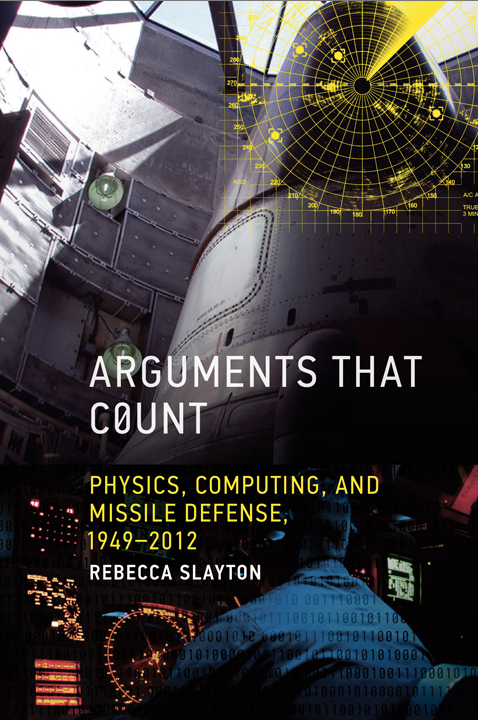
Joseph Felter, a senior research scholar who focuses on counterinsurgency, co-authored an article in the American Economic Review about development projects and civil conflict. Senior Fellow Scott Sagan co-authored a policy brief for the American Academy of Arts and Sciences about insider threats challenging nuclear security systems. And Senior Fellow Siegfried Hecker and Abbas Milani, founding co-director of the Iran Democracy Project at Stanford, together wrote an analysis for the Bulletin of Atomic Scientists calling on Iran to move beyond false nationalism and the misguided notion that uranium enrichment is the sine qua non of peaceful nuclear energy.
CISAC Zuckerman Fellow Thomas Hegghammer provided testimony to the House subcommittee on Terrorism, Nonproliferation and Trade about the future of anti-Western jihadists, and Senior Fellow Rod Ewing testified before the House subcommittee on Energy and Water Development about the evolving debate over the disposal of nuclear waste.
Online Learning
The center is making its first foray into online learning, understanding the importance of spreading its research and findings to audiences on the Stanford campus and around the world.
Zegart and Crenshaw are spearheading an online class that spins off their popular course, “International Security in a Changing World,” which has been taught at Stanford by various CISAC faculty for more than 40 years. The two worked with the Office of the Vice Provost for Online Learning to film class lectures during last winter’s course and to add lectures from other CISAC visitors throughout the year. They will soon be presenting a public package of dozens of videos on CISAC’s and Stanford’s YouTube channels under the theme: Security Matters.
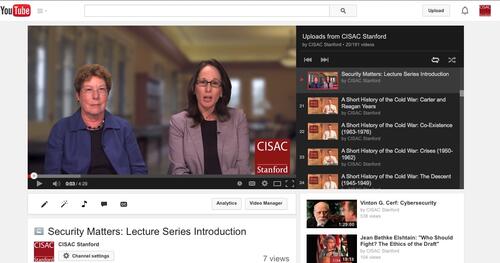
The videos include Stanford professors and fellows – such as Francis Fukuyama on power in the 21st century and implications for U.S. foreign policy, and Abbas Milani on Iran’s nuclear ambitions – as well as visiting scholars from around the world. Former FBI Director Robert Mueller recalls his personal thoughts and professional actions in the hours and days following the 9/11 terrorist attacks; and Relman discusses so-called “doomsday viruses” and how they might spread.
Secretary Perry taught a course at Stanford last winter entitled, “Living at the Nuclear Brink: Yesterday and Today,” and had each guest lecture videotaped for an online class that will go public later this year. Many of those who spoke to his class were Stanford professors, as well as former Secretary of State George Shultz and Russia’s former deputy minister of defense, Andre Kokoshin.
New Website Design
CISAC and all FSI centers launched a new website devoted to the center’s mission of making the world a safer place. The visually compelling site takes a deep dive into our research, scholars and students. The communications team at CISAC and FSI worked together through the last academic year to build the architecture and design. We intend the site to become a resource for colleagues to easily obtain analyses and information about issues around the world. The event calendar is updated daily and news stories, multimedia, and social networking projects are also featured on the new site.
How You Can Get Involved
There are many ways to stay involved at CISAC, from signing up for our monthly e-newsletter and watching our new courses online, to mentoring undergraduates, attending seminars, and providing financial support that is essential for our teaching, research, and policy missions. We invite you to take a look at our new website, or contact Beth Duff–Brown, CISAC communications and editorial manager, at bethduff@stanford.edu.