Join us on Tuesday, February 15 from 12 PM - 1 PM PT for Demand-Driven Ideology on YouTube in the 2020 Election and Beyond featuring Kevin Munger of Penn State University in conversation with Nate Persily of the Stanford Cyber Policy Center. This weekly seminar series is jointly organized by the Cyber Policy Center’s Program on Democracy and the Internet and the Hewlett Foundation’s Cyber Initiative.
"YouTube Politics" has evolved considerably over the past decade. Expanding on a supply-and-demand framework, we argue that the changing composition of the audience and the wider political ecosystem influences what videos get created and by whom. Of particular interest is the emergence of a second dimension, largely orthogonal to the traditional left-right divide: the pro- / anti-establishment dimension. The movement of some portion of American citizens across the first dimension towards the anti-establishment pole during the 2000s and 2010s was observed and responded to by media and political entrepreneurs. We chart this process at large scale during the 2020 US Presidential Election campaign and throughout 2021. Using data from nearly three thousand channels who discuss US Politics and a quarter-billion comments left on their videos, we plot the ideological space of YouTube Politics and argue for the insufficiency of a unidimensional model of US politics on YouTube, online, and in general.
About the Speakers:
Image
Kevin Munger is an Assistant Professor of Political Science and Social Data Analytics at Penn State University. Kevin's research focuses on the implications of the internet and social media for the communication of political information. His specialty is the investigation of the economics of online media; current research models "Clickbait Media" and uses digital experiments to test the implications of these models on consumers of political information.
Image
Moderator: Nathaniel Persily is the James B. McClatchy Professor of Law at Stanford Law School, with appointments in the departments of Political Science, Communication, and FSI. Prior to joining Stanford, Professor Persily taught at Columbia and the University of Pennsylvania Law School, and as a visiting professor at Harvard, NYU, Princeton, the University of Amsterdam, and the University of Melbourne. Professor Persily’s scholarship and legal practice focus on American election law or what is sometimes called the “law of democracy,” which addresses issues such as voting rights, political parties, campaign finance, redistricting, and election administration. He has served as a special master or court-appointed expert to craft congressional or legislative districting plans for Georgia, Maryland, Connecticut, New York, North Carolina, and Pennsylvania. He also served as the Senior Research Director for the Presidential Commission on Election Administration. His current work, for which he has been honored as a Guggenheim Fellow, Andrew Carnegie Fellow, and a Fellow at the Center for Advanced Study in the Behavioral Sciences, examines the impact of changing technology on political communication, campaigns, and election administration. He is codirector of the Stanford Cyber Policy Center, Stanford Program on Democracy and the Internet, and the Stanford-MIT Healthy Elections Project, which supported local election officials in taking the necessary steps during the COVID-19 pandemic to provide safe voting options for the 2020 election. He is also a member of the American Academy of Arts and Sciences, and a commissioner on the Kofi Annan Commission on Elections and Democracy in the Digital Age.
What can be done consistent with the First Amendment to ensure that American voters can make informed election decisions and hold free elections amid a flood of virally spread disinformation and the collapse of local news reporting? How should American society counter the actions of people like former President Donald J. Trump, who used social media to convince millions of his followers to doubt the integrity of U.S. elections and helped foment a violent insurrection? What can we do to minimize disinformation campaigns aimed at suppressing voter turnout?Join us on March 8 for a book talk with author Rick Hasen, the Chancellor’s Professor of Law and Political Science at the University of California, Irvine in discussion with Cyber Policy Center co-director, Nate Persily on Rick’s newly released book, Cheap Speech.
Note the publisher is offering a 30% discount with code YECS30. Visit yalebooks.com for purchase.
About the Speaker:
Image
Professor Richard L. Hasen is Chancellor’s Professor of Law and Political Science at the University of California, Irvine and is Co-Director of the Fair Elections and Free Speech Center. Hasen is a nationally recognized expert in election law and campaign finance regulation, writing as well in the areas of legislation and statutory interpretation, remedies, and torts. He is co-author of leading casebooks in election law and remedies. He served in 2020 as a CNN Election Law Analyst. From 2001-2010, he served (with Dan Lowenstein) as founding co-editor of the quarterly peer-reviewed publication, Election Law Journal. He is the author of over 100 articles on election law issues, published in numerous journals including the Harvard Law Review, Stanford Law Review and Supreme Court Review. He was elected to The American Law Institute in 2009 and serves as Reporter (with Professor Douglas Laycock) on the ALI’s law reform project: Restatement (Third) of Torts: Remedies. He also is an adviser on the Restatement (Third) of Torts: Concluding Provisions. Professor Hasen was named one of the 100 most influential lawyers in America by The National Law Journal in 2013, and one of the Top 100 Lawyers in California in 2005 and 2016 by the Los Angeles and San Francisco Daily Journal.
Join us on Tuesday, February 8 from 12 PM - 1 PM PT for “The Quantum Age” featuring Chris Hoofnagle, Faculty Director, Center for Long–Term Cybersecurity at UC Berkeley, and Zahra Takhshid, University of Denver Sturm College of Law in conversation with Kelly Born of the Hewlett Foundation. This weekly seminar series is jointly organized by the Cyber Policy Center’s Program on Democracy and the Internet and the Hewlett Foundation’s Cyber Initiative.
Quantum technologies have provided capabilities that seem strange, are powerful, and at times, frightening. These capabilities are so different from our conventional intuition that they seem to ride the fine border between science fiction and fantasy—yet some quantum technologies can be commercially purchased today, and more are just around the corner. This discussion will explore the different kinds of quantum technologies and their legal, political, and social implications and, more broadly, the ways we can think about regulating the fast growing ecosystem of emerging technologies.
About the Speakers:
Chris Hoofnagle
Chris Jay Hoofnagle is Professor of Law in Residence at the University of California, Berkeley, School of Law, where he teaches cybersecurity, programming for lawyers and torts. He is an affiliated faculty member with the Simons Institute for the Theory of Computing, a Professor of Practice in the School of Information, and a faculty director of the Berkeley Center for Law & Technology. Hoofnagle’s new book with Simson Garfinkel, Law and Policy for the Quantum Age is now available (open access) from Cambridge University Press, which also published his first book, Federal Trade Commission Privacy Law and Policy (2016). An elected member of the American Law Institute, Hoofnagle is of counsel to Gunderson Dettmer LLP, and serves on boards for Constella Intelligence and Palantir Technologies.
Zahra Takhshid
Zahra Takhshid is an Assistant Professor of Law at the University of Denver Sturm College of Law. Before joining DU, she was the Lewis Fellow for Law Teaching and Lecturer on Law at Harvard Law School where she taught “Common Law and Privacy Torts.” Zahra is also a Faculty Associate at the Berkman Klein Center for Internet and Society at Harvard University and has been selected as the 2021 Quantum Fellow at the Center for Quantum Networks of the University of Arizona in partnership with Yale Law School’s Information Society Project (ISP). She teaches and writes about torts, privacy, technology and the law. A second strand of her interest is comparative and Islamic law. Zahra’s research has been published or is forthcoming in Cardozo Law Review, Minnesota Law Review Online, UCLA Journal of Islamic and Near. Eastern Law, Vanderbilt Journal of Entertainment and Technology, among others.
Image
Moderator: Kelly Born is the Director of the Cyber Initiative at the William and Flora Hewlett Foundation. She leads a ten-year, $130 million grantmaking effort that aims to build a more robust cybersecurity field and improve policymaking. Previously, Kelly was executive director of the Stanford Cyber Policy Center. Prior to that, she was a Program Officer for the Madison Initiative at the William and Flora Hewlett Foundation, an 8-year, $150 million portfolio focused on improving U.S. democracy. Kelly oversaw Madison’s grantmaking on campaigns and elections, and digital disinformation. Before that, Kelly worked as a strategy consultant with the Monitor Institute, a nonprofit consulting firm, where she supported strategic planning efforts at a number of foundations. Earlier in her career, she consulted with nonprofits, the private sector, and governments in the United States, Africa, Asia, Latin America, and Europe.
Join us on Tuesday, February 1st from 12 PM - 1 PM PT for Algorithmic Newsfeeds and Elections featuring one of our postdoctoral scholars, Alessandro Vecchiato. This weekly seminar series is jointly organized by the Cyber Policy Center’s Program on Democracy and the Internet and the Hewlett Foundation’s Cyber Initiative.
While personalization algorithms are ubiquitous online, their impact on public opinion and voting behavior is still largely unknown. This talk looks at this question by presenting results from a globally replicable, lab-in-the-field experiment with a custom-developed news app. We evaluate the impact of personalized news feed on news consumption, public opinion, turnout, and voting behavior. The results show that personalization significantly skews the news consumption of politically extreme users while allowing most other users to maintain a moderate news diet. However, personalized news feeds are shown to reinforce pre-existing beliefs for all users, including a demobilizing effect for unlikely voters. While our effects are small due to design constraints, our findings call for more transparency and regulation on platforms.
The session is open to the public, but registration is required.
ABOUT THE SPEAKERS:
Image
Alessandro Vecchiato is a postdoctoral fellow at the Program on Democracy and the Internet at Stanford University. He received his Ph.D. in Politics from New York University in May 2019. His work looks at internet technologies' role in shaping political beliefs and electoral outcomes. In his dissertation, he uses primarily experimental methods to study how algorithmic personalization in social media news feeds affects the beliefs and preferences of voters. In other work, he investigated how internet-mediated communication through social media has affected politicians' relationships with voters.
Image
Nathaniel Persily is the James B. McClatchy Professor of Law at Stanford Law School, with appointments in the departments of Political Science, Communication, and FSI. Prior to joining Stanford, Professor Persily taught at Columbia and the University of Pennsylvania Law School, and as a visiting professor at Harvard, NYU, Princeton, the University of Amsterdam, and the University of Melbourne. Professor Persily’s scholarship and legal practice focus on American election law or what is sometimes called the “law of democracy,” which addresses issues such as voting rights, political parties, campaign finance, redistricting, and election administration. He has served as a special master or court-appointed expert to craft congressional or legislative districting plans for Georgia, Maryland, Connecticut, New York, North Carolina, and Pennsylvania. He also served as the Senior Research Director for the Presidential Commission on Election Administration. His current work, for which he has been honored as a Guggenheim Fellow, Andrew Carnegie Fellow, and a Fellow at the Center for Advanced Study in the Behavioral Sciences, examines the impact of changing technology on political communication, campaigns, and election administration. He is codirector of the Stanford Cyber Policy Center, Stanford Program on Democracy and the Internet, and the Stanford-MIT Healthy Elections Project, which supported local election officials in taking the necessary steps during the COVID-19 pandemic to provide safe voting options for the 2020 election. He is also a member of the American Academy of Arts and Sciences, and a commissioner on the Kofi Annan Commission on Elections and Democracy in the Digital Age.
Join us on Tuesday, January 18 from 12 PM - 1 PM PST for Free Speech on Public Platforms featuring Professor Jamal Greene of Columbia Law School in conversation with Daphne Keller, Director of the Program on Platform Regulation at the CPC. This weekly seminar series is jointly organized by the Cyber Policy Center’s Program on Democracy and the Internet and the Hewlett Foundation’s Cyber Initiative.
It is commonly assumed that social media companies owe their freedom to moderate solely to their status as private actors. This seminar explores the adequacy of that assumption by considering the hypothetical construct of a state-run social media platform. Jamal Greene argues that the categorical nature of First Amendment norms leave the doctrine ill-equipped to order regulation of such a platform, and that international human rights norms, while less categorical, remain immature in this space. Greene suggests that the most promising area of legal intervention would address the development of procedural rather than substantive norms.
Speaker:
Jamal Greene is the Dwight Professor of Law at Columbia Law School, where he teaches courses in constitutional law, comparative constitutional law, and the law of the political process. He is the author of How Rights Went Wrong: Why Our Obsession With Rights Is Tearing America Apart, as well as numerous articles and book chapters on constitutional law and theory. He is also a co-chair of the Oversight Board, an independent body that reviews content moderation decisions on Facebook and Instagram. He served as a law clerk to the Hon. Guido Calabresi on the U.S. Court of Appeals for the Second Circuit and for the Hon. John Paul Stevens on the U.S. Supreme Court. He earned his J.D. from Yale Law School and his A.B. from Harvard College.
Join us for our winter seminar series starting Tuesday, January 11 from 12 PM - 1 PM PST. The first in the session is Cloud Governance Challenges and features leaders from the Carnegie Endowment’s Cloud Governance Project and Marietje Schaake of the Stanford Cyber Policy Center, in conversation with Kelly Born of the Hewlett Foundation. This weekly seminar series is jointly organized by the Cyber Policy Center’s Program on Democracy and the Internet and the Hewlett Foundation’s Cyber Initiative.
Central to the ongoing digital transformation is the growth of cloud computing, which is enabling remarkable gains in efficiency, innovation, and connectivity around the world. However, the cloud also accentuates many preexisting digital policy challenges and brings to the fore new ones. It increases the consequences of disruption resulting from cyberattacks and natural disasters, and raises the stakes associated with ensuring equitable access to the digital environment. It also creates some new challenges associated with the concentration of the cloud market in the hands of a few hyperscale providers. Left to their own devices, cloud providers lack the incentives to comprehensively address these issues, and governments’ ability to fill the gap is being challenged by the pace of the developments in the cloud technology landscape. To promote more coherent and effective governance of the cloud, concerned players must recognize the challenges, interconnections, and policy tradeoffs across issue areas. They will need to apply a combination of regulation, self-regulation, and industry standards, while balancing competing private, national, and international interests.
Speakers:
Kelly Born, Director, Cyber Initiative, William and Flora Hewlett Foundation
Ariel Eli Levite, Nonresident Senior Fellow, Carnegie Endowment for International Peace
Vishnu Kannan, Special Assistant to the President, Carnegie Endowment for International Peace
Marietje Schaake, International Policy Director, Cyber Policy Center
John Perrino received his undergraduate and MPA at the George Washington University, focusing on internet policy and political communication. At the Stanford Internet Observatory he works on expanding policy strategy and working to build SIO's presence in DC.
He previously held positions with GW’s Columbian College of Arts and Sciences and Elliott School of International Affairs. Perrino got his start in Internet policy as a Communications Fellow at the Internet Education Foundation, helping organize and promote Capitol Hill briefings and the annual State of the Net conference. He was most recently a Director at Glen Echo Group.
Former Policy Analyst, Stanford Internet Observatory, Cyber Policy Center
Join us Tuesday, December 7th from 12 PM - 1 PM PST for “Media Choices, Niche Behavior, and Biases in Online Information” featuring Sandra González-Bailón, Associate Professor at the Annenberg School for Communication at University of Pennsylvania. This seminar series is organized by the Cyber Policy Center’s Program on Democracy and the Internet and the William and Flora Hewlett Foundation’s Cyber Initiative.
The quality of our democracies relies on the quality of the information that citizens consume but we still know very little about how citizens engage with the news “in the wild”. In this talk, I will discuss two papers that examine that question in different settings. The first paper analyzes the media choices of a representative panel of the U.S. population (N ~ 55,000) as they consume TV, web, and YouTube content over a period of 44 months. Less than 10% of the panelists (N ~ 5,300) view and browse news on the three platforms. This small group of news hyper-consumers is formed predominantly by older male users with higher education. We find no evidence of substitution effects in the time these users spend consuming news on each of the three platforms, but consuming news across the media landscape is a choice that only a small and unrepresentative slice of the population makes. These results help us characterize the digital equivalent of the ‘opinion leaders’ first proposed to understand the effects of mass media. The hyper-consumers we identify in our analyses create the elite of opinion leaders that have a disproportionate influence in how news content is selected, circulated, and (ultimately) algorithmically amplified. That this small group is far from representing the population at large is one of the ways in which online information may perpetuate important biases in the salience of some topics over others. The second paper analyzes news sharing in social media during one of the largest protest mobilizations in U.S. history to examine ideological asymmetries in the posting of news content. We extract the list of URLs shared during the mobilization period and we characterize those web sites in terms of their audience reach and the ideological composition of that audience. We also analyze the reliability of the sites in terms of the credibility and transparency of the information they publish. We show that there is no evidence of unreliable sources having any prominent visibility during the protest period, but we do identify asymmetries in the ideological slant of the sources shared, with a clear bias towards right-leaning domains. Our results suggest that online networks are contested spaces where the activism of progressive movements coexists with the narratives of mainstream media, which gain visibility under the same stream of information but whose reporting is not necessarily aligned with the activists’ goals.
About the speaker:
Sandra González-Bailón is an Associate Professor at the Annenberg School for Communication, and affiliated faculty at the Warren Center for Network and Data Sciences. Her research lies at the intersection of network science, computational tools, and political communication. She is the author of Decoding the Social World (MIT Press, 2017) and co-editor of The Oxford Handbook of Networked Communication (OUP, 2020). More information on her research can be found at https://sandragonzalezbailon.net/
Her articles have appeared in journals like PNAS, Nature, Science, Political Communication, The Journal of Communication, and Social Networks, among others. She is the author of the book Decoding the Social World (MIT Press, 2017) and co-editor of The Oxford Handbook of Networked Communication (OUP, 2020). She serves as Associate Editor for the journals Social Networks, EPJ Data Science, and The International Journal of Press/Politics, and she is a member of the Board of Reviewing Editors for Science. She leads the research group DiMeNet (/daɪmnet/) — acronym for Digital Media, Networks, and Political Communication.
Join us on November 16th for “Analyzing Social Media From A User-eye View With PIEGraph” from 12 - 1 PM PT featuring Deen Freelon, associate professor at the UNC Hussman School of Journalism and Media at the University of North Carolina. This session will be moderated by Jeff Hancock, founding director of the Stanford Social Media Lab and is organized by the Cyber Policy Center’s Program on Democracy and the Internet and the William and Flora Hewlett Foundation’s Cyber Initiative.
Quantitative social media research has traditionally been conducted from what might be called a platform-centric view, wherein researchers sample, collect, and analyzed data based on one or more topic- or user-specific keywords. Such studies have yielded many valuable insights, but they convey little about individual users’ tailored social media environments—what Professor Freelon calls the user-eye view. Studies that investigate social media from a user-eye view tend to be rare because of the expense involved and a limited number of suitable tools. This talk introduces PIEGraph, a novel system for user-eye view research that offers key advantages over existing systems. PIEGraph is lightweight, scalable, open-source, OS-independent, and collects data viewable from mobile and desktop interfaces directly from APIs. The system incorporates an extensible tagging taxonomy that allows for straightforward classification of a wide range of political, social, and cultural phenomena. The presentation will focus on how Professor Freelon’s research team is using PIEGraph to examine users’ potential levels of exposure to high- and low-quality information sources across the ideological spectrum.
Speakers:
Deen Freelon is an associate professor at the UNC Hussman School of Journalism and Media at the University of North Carolina and a principal researcher at the Center for Information, Technology, and Public Life (CITAP). His theoretical interests address how ordinary citizens use social media and other digital communication technologies for political purposes, paying particular attention to how identity characteristics (e.g. race, gender, ideology) influence these uses. Methodologically, he is interested in how computational research techniques can be used to answer some of the most fundamental questions of communication science. Freelon has worked at the forefront of political communication and computational social science for over a decade, coauthoring some of the first communication studies to apply computational methods to social media data.
Jeff Hancock is the founding director of the Stanford Social Media Lab and is Harry and Norman Chandler Professor of Communication at Stanford University. Professor Hancock and his group work on understanding psychological and interpersonal processes in social media. The team specializes in using computational linguistics and experiments to understand how the words we use can reveal psychological and social dynamics, such as deception and trust, emotional dynamics, intimacy and relationships, and social support. Recently Professor Hancock has begun work on understanding the mental models people have about algorithms in social media, as well as working on the ethical issues associated with computational social science.
Jeff Hancock is founding director of the Center and well-known for his research on how people use deception with technology, from sending texts and emails to detecting fake online reviews. He is the Harry and Norman Chandler Professor of Communication at Stanford University, Founding Director of the Stanford Social Media Lab, a senior fellow at the Freeman Spogli Institute (FSI), Founding Editor of the Journal of Online Trust & Safety, and previously the co-director of the Stanford Cyber Policy Center.
A leading expert in behavioral sciences and the psychology of online interaction, Professor Hancock studies the psychological aspects of social media and AI technology. Professor Hancock earned his PhD in Psychology at Dalhousie University, Canada and was Professor of Information Science and Communication at Cornell prior to joining Stanford in 2015.
Director, Stanford Social Media Lab
Director, Stanford Tech Impact and Policy Center
Senior Fellow at the Freeman Spogli Institute for International Studies
Institute Faculty, Freeman Spogli Institute for International Studies
Join us November 2nd from 12 PM - 1 PM PT for “The Global Spyware Crisis and How to Stop It” featuring David Kaye, professor of law at University of California, Irvine, and moderated by Kelly Born, director of the Cyber Initiative at the William and Flora Hewlett Foundation. This seminar series is organized by the Cyber Policy Center’s Program on Democracy and the Internet and the Hewlett Foundation’s Cyber Initiative.
The private surveillance (or spyware) industry has thrived with low levels of transparency and public scrutiny and weak controls on transfers of technology. Governments offer limited information on the use of surveillance products and regulations of private surveillance companies. Meanwhile, these tools – most famously but not exclusively the Pegasus malware of the Israeli NSO Group – are increasingly used against journalists, opposition figures, those in dissent, and others. Public reporting – particularly energized by release of the Pegasus Project reporting by the Forbidden Stories consortium in the summer of 2021 – has begun to generate increasing global concern, and yet policy and law lag far behind. This presentation will focus on a human rights-based legal and policy framework for the regulation and accountability of, as well as transparency within, the private surveillance industry.
Speaker Profile:
David Kaye is a professor of law at the University of California, Irvine, director of its International Justice Clinic, and co-director of the Center on Fair Elections and Free Speech. From 2014 – 2020 he served as the United Nations Special Rapporteur on the promotion and protection of the right to freedom of opinion and expression. Author of Speech Police: The Global Struggle to Govern the Internet (2019), he is currently Independent Chair of the Board of the Global Network Initiative and a Trustee of ARTICLE 19.


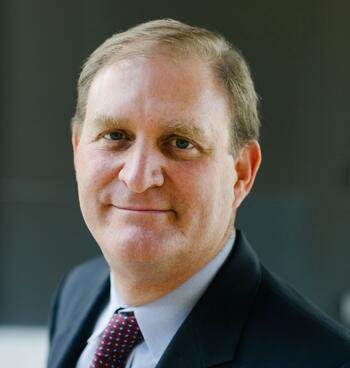


 Chris Hoofnagle
 Zahra Takhshid


